Save Our Homes has split Hillsborough's tax roll — and a 2025 buyer pays far more than a 2010 neighbor
Certified state rolls show about $60 billion of Hillsborough County property value shielded from taxes in 2024, leaving new buyers with bills roughly 50% higher than long-time owners on identical homes.
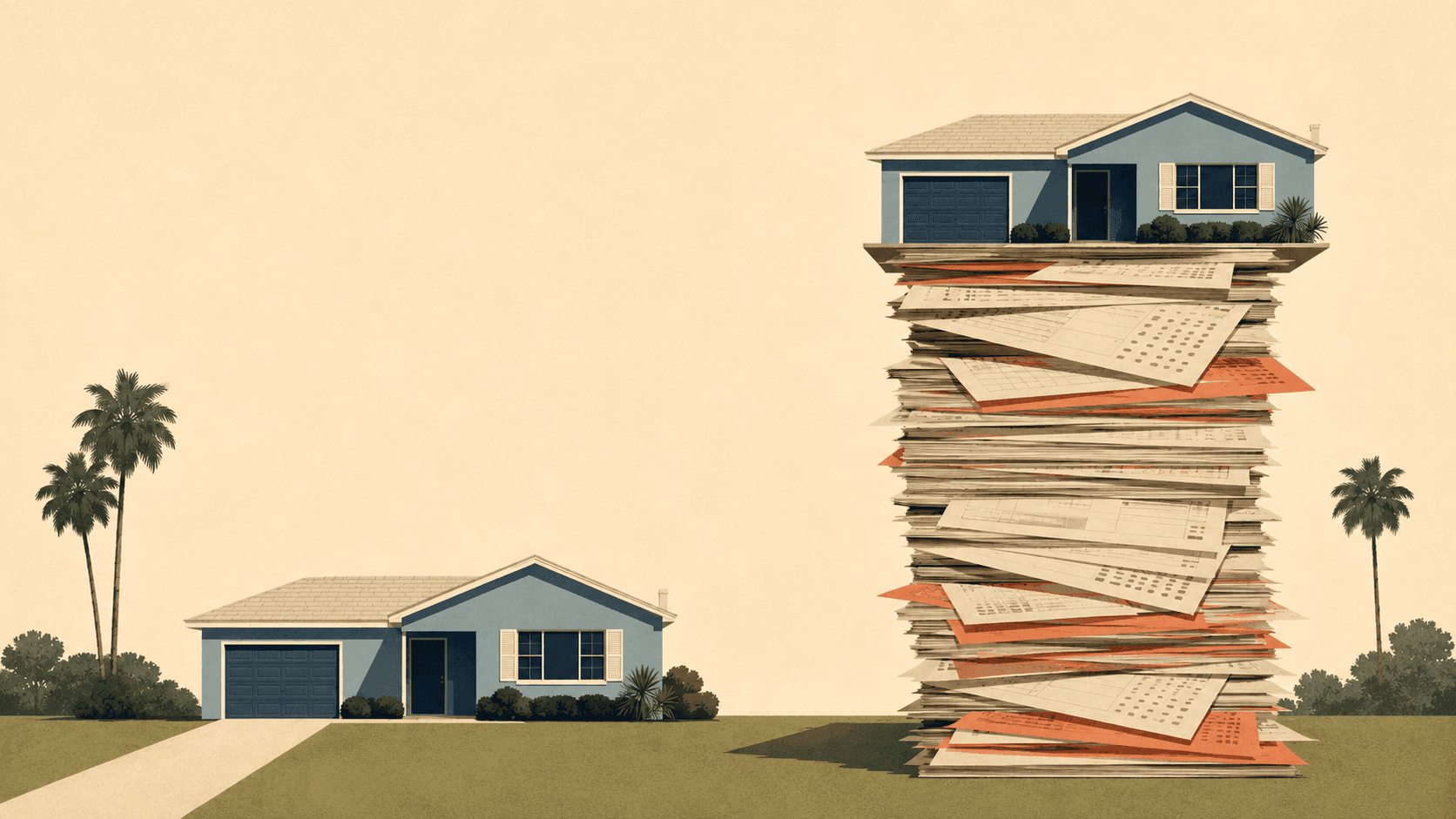
The house next door might be identical to yours — same floor plan, same street, same roof line. But if your neighbor bought in 2010 and you bought in 2025, Florida's tax code says you owe far more. In Hillsborough County, a constitutional cap called Save Our Homes has quietly split the property tax roll into two classes of owner: long-timers taxed on decades-old values, and new buyers taxed on today's full market price.
Certified rolls from the Florida Department of Revenue show the gap between what Hillsborough property is worth and what it is actually taxed on reached about $60 billion in 2024 — value legally held off the tax roll, most of it by Save Our Homes. For a long-time homesteaded owner, that translates into a tax bill roughly a third to a half smaller than a new buyer's on the very same house.
The mechanism is simple and it compounds. Every January 1, the Property Appraiser assigns each parcel a just value — market value. But once a home is homesteaded, Save Our Homes limits how fast its assessed value, the figure taxes are built on, can rise. Over a hot decade, the two numbers drift far apart. When the home sells, the cap resets to the buyer's price, and the gap snaps shut for that parcel — and only that parcel.
What the data shows
Hillsborough's total just value climbed from $234.5 billion in 2022 to $270.5 billion in 2024 — a 15.4% jump in two years. County assessed value, the capped figure taxes are built on, trailed behind at $176.4 billion, then $196.3 billion, then $210.4 billion. The wedge between the two lines — what the state labels assessment limitations and classifications, dominated by the Save Our Homes homestead cap — held between $58 billion and $60 billion across the period.
That wedge is the story. It is value that exists on paper but never reaches a tax bill. The taxable-value line sits lower still, after the homestead and other exemptions are subtracted; in 2024 the county's taxable base was $168.4 billion, about 62% of just value. In other words, more than a third of the county's market value is legally invisible to the county tax rate.
Statewide context confirms this is structural, not a Tampa quirk. The Florida Policy Institute reports that because of Save Our Homes and homestead exemptions, Florida homeowners' assessments are 'on average — 50.3 percent lower than market values,' and that 'Florida's SOH costs about $9.1 billion' in revenue that would otherwise go to local governments each year.
To make the split concrete, take one representative $400,000 Hillsborough home in 2025. A buyer who purchased and homesteaded it back in 2010 has watched Save Our Homes hold their assessed value near $271,000, because the cap limits annual increases to 3% or inflation, whichever is lower. A 2025 buyer's assessed value resets to the full $400,000 purchase price.
At the county's 2025 combined millage of about 15.73 mills and the $50,722 homestead exemption, the long-time owner owes roughly $3,470 while the new buyer owes about $5,490 — a difference of roughly $2,000 a year on the identical house. The homes are the same; only the year of purchase differs.
How we got here
Save Our Homes was approved by voters in 1992 as Amendment 10 and took effect in 1995. It was authored by then-Lee County Property Appraiser Ken Wilkinson, who promised that the amendment would protect older homeowners from being forced to sell their residences because of soaring property taxes. It caps annual increases in a homestead's assessed value at 3% or the change in the Consumer Price Index, whichever is less. When a property sells, the cap resets to the new market value.
Later amendments layered on more. In 2008, Amendment 1 added portability — letting owners carry their accumulated Save Our Homes benefit to a new Florida homestead — and a second $25,000 homestead exemption on top of the original $25,000. Amendment 5 of 2020 extended the portability window to three tax years. A separate Amendment 5, passed in 2024, indexes the second exemption to inflation; per Florida DOR Bulletin PTO 24-20, the total homestead exemption reached $50,722 for 2025 and rises to $51,411 in 2026 as the second portion climbs to $26,411.
Bills are climbing for another reason too. Hillsborough County voters approved a four-year 1-mill school levy running July 1, 2025 through June 30, 2029. Per the Hillsborough County School District, the typical homeowner faces an additional annual increase of about $281 in property taxes, funding a roughly $6,000 raise for teachers. County ad valorem revenue rose 40.0% between FY2021 and FY2024, to $1.36 billion, even as the operating millage rate itself edged down.
Modeled across cohorts, the pattern is a staircase: a 2010 buyer's bill sits near $3,470, a 2016 buyer near $4,190, a 2022 buyer near $5,020, and a 2025 buyer near $5,490. Every cohort owns the identical house. The only thing that changes is how many years of Save Our Homes protection have accrued since the last sale reset the clock.
What it means and what's next
The split rewards staying put and penalizes moving. As The Florida Bar Journal notes in 'Protecting and Preserving the Save Our Homes Cap,' 'Some owners of protected homestead properties are opting to stay in their existing homes because the taxes are so low as compared to selling and buying properties of comparable value.' That lock-in thins the resale market and shifts a growing share of the burden onto newer and non-homestead owners — the very buyers, renters and investors who are least protected by the cap.
Relief is on the table. Lawmakers passed House Joint Resolution 1-F, the 'Save Our Homes from Excessive Property Taxes' amendment, which cleared the House 75–26 and the Senate 30–9 on June 2, 2026, and goes to voters on the November 3, 2026 ballot. It would raise the non-school homestead exemption from $50,000 to $150,000 in 2027 and $250,000 in 2028. Because school taxes are untouched, no bill would fall to zero, and the measure needs 60% voter approval to take effect.
The scale of what is at stake is enormous. Florida's Revenue Estimating Conference pegged the statewide county-level assessment differential at about $1.24 trillion for 2025 — a measure of how deeply the caps now shape every county's tax base. In Hillsborough, the gap between market and taxable value is not a rounding error; it is the single biggest force determining who pays what, and it will keep widening as long as values rise faster than the 3% cap allows.
- Hillsborough total just value: $270.5 billion in 2024, up from $234.5 billion in 2022 (+15.4%) — Florida DOR Property Tax Oversight County Profiles, 2024 roll, as of Jan 1, 2024
- County assessed value: $210.4 billion in 2024; county taxable value $168.4 billion (≈62% of just value) — Florida DOR County Profiles, 2024
- Assessment limitations and classifications (mostly Save Our Homes): about $60.1 billion in 2024, up from $58.1 billion in 2022 — Florida DOR County Profiles
- County ad valorem revenue: $1,363.71 million in FY2024, up 40.0% from FY2021 — Florida Association of Counties / Florida DOR, 2025
- 2025 combined millage ≈ 15.73 mills; 2025 homestead exemption $50,722, rising to $51,411 for 2026 — Florida DOR / DOR Bulletin PTO 24-20
- Statewide county assessment differential: about $1.24 trillion in 2025 — Florida EDR Ad Valorem Estimating Conference, January 2026
More from us

Waymo Prepares Driverless Robotaxi Launch in Tampa Amid Safety Debate
The Alphabet-owned company plans to roll out fully autonomous vehicles for employees first, following tests in the area since late 2025. The expansion has ignited discussions among officials regarding regulatory oversight and transparency.
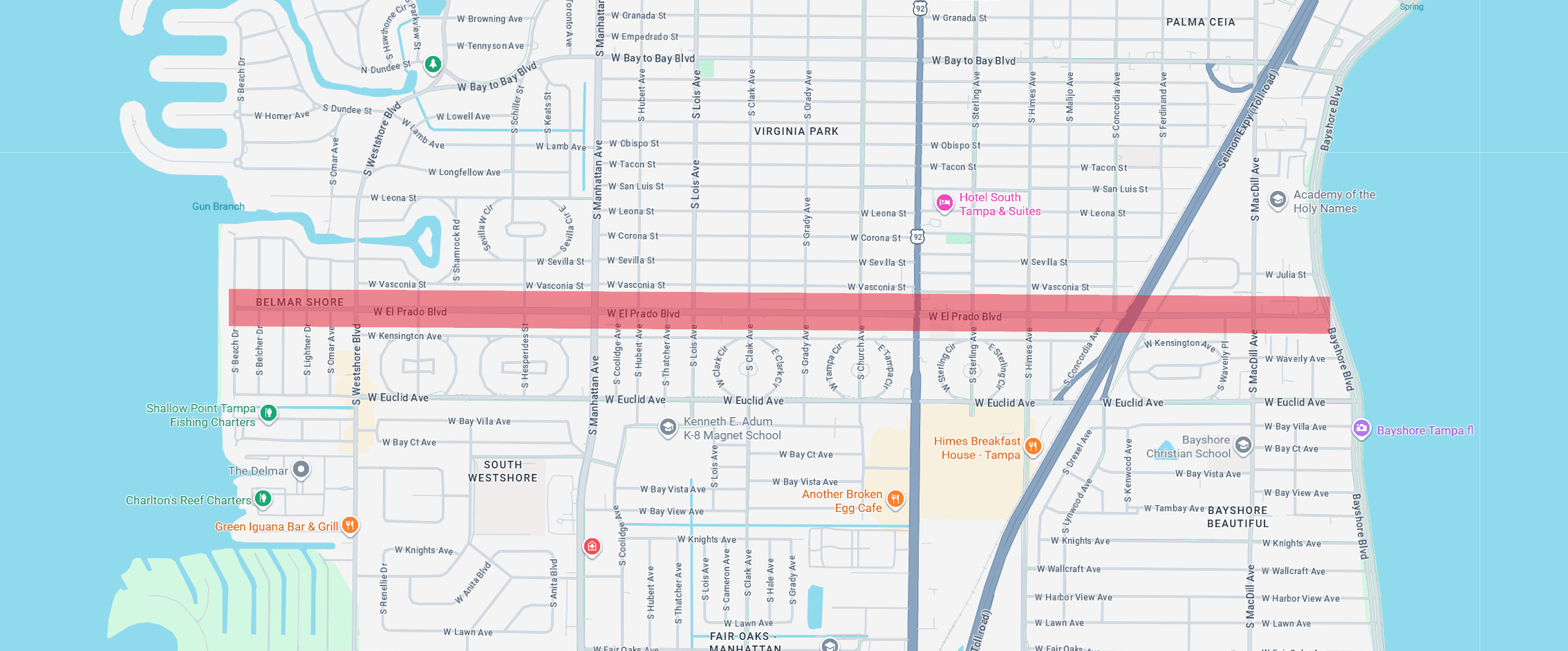
West El Prado Blvd Faces Daily Lane Closures for Water System Work
The Tampa Water Department will conduct maintenance on the local water distribution system, leading to daily lane closures on West El Prado Boulevard starting Thursday.
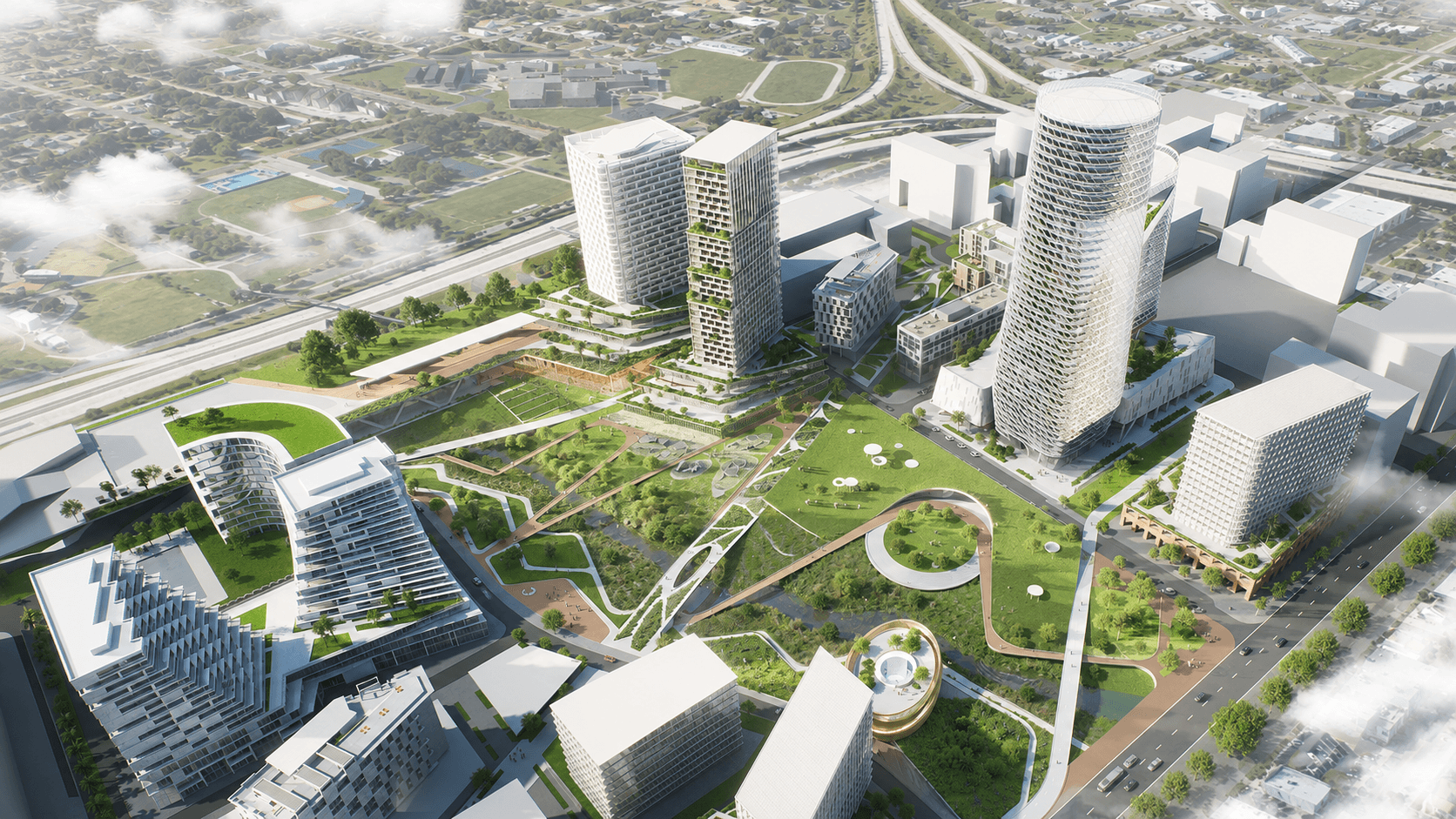
Welch Engages Rooted in Progress on Gas Plant District Redevelopment
St. Petersburg Mayor Ken Welch recently met with Rooted in Progress to discuss ongoing developments for the historic Gas Plant District redevelopment initiative.